How to Improve Your Times in F1 25
Whether you're just starting in F1 25 or you have experience but want to shave off those extra tenths, this guide will help you evolve consistently.
1. Understand Telemetry
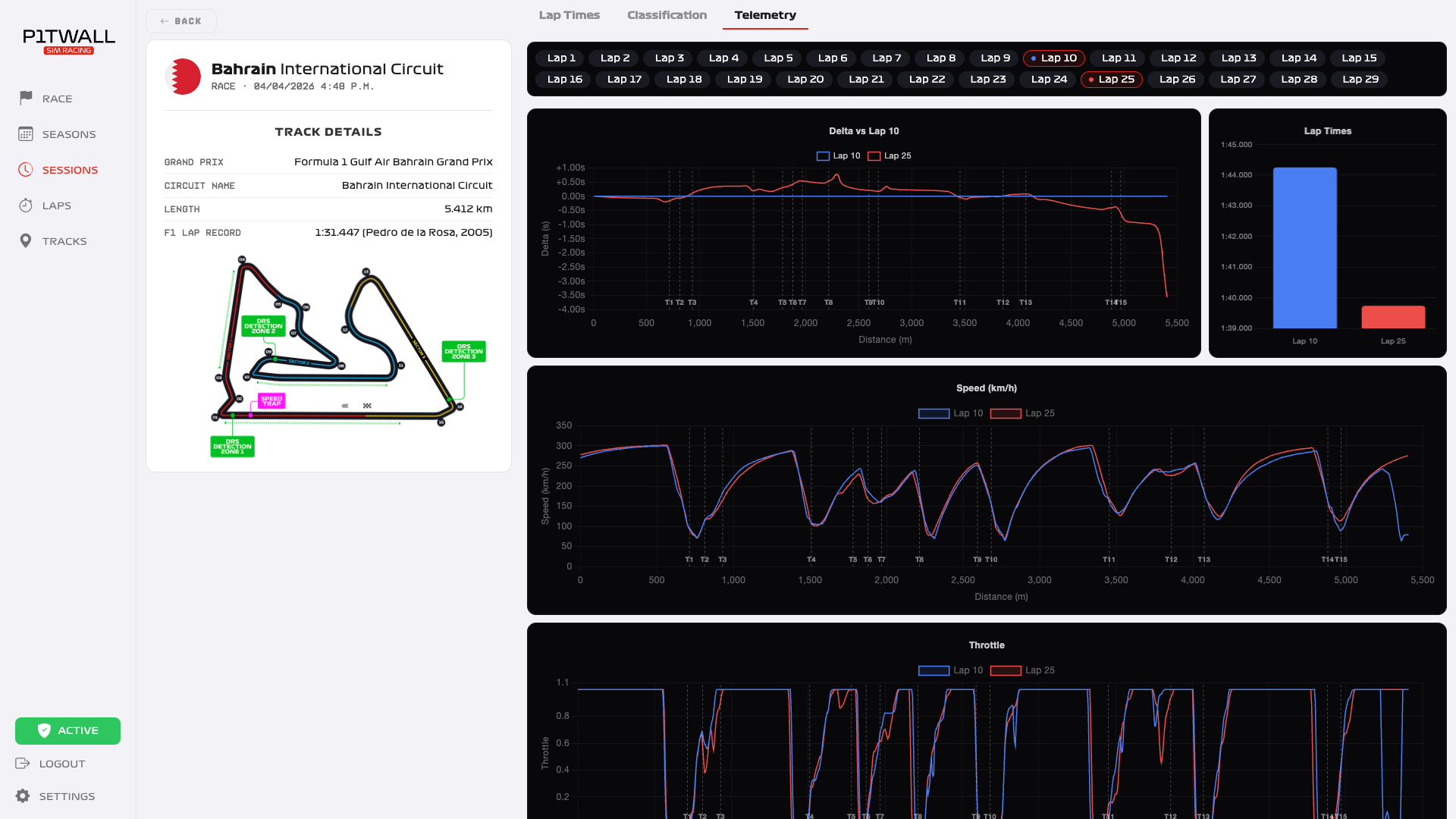
Telemetry is your best friend. Before changing any setup, analyze your data:
- Straight-line speed: compare with the game's ideal time.
- Braking points: are you braking too early?
- Corner exit acceleration: traction control might be holding you back.
- Tire temperature: tires outside the ideal window lose grip.
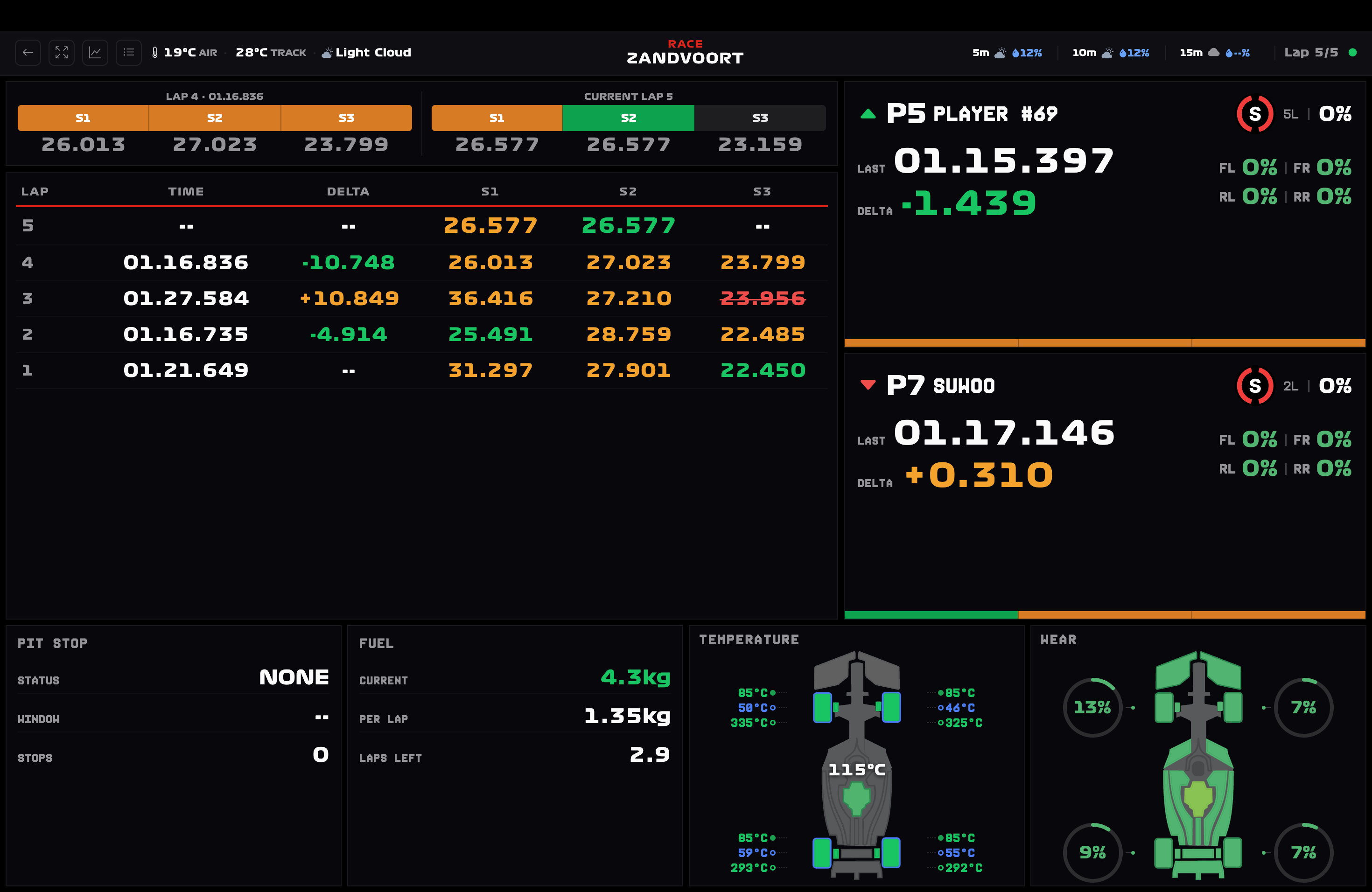
Tip: use Pit Wall Sim Racing to visualize your telemetry in real-time and compare laps.
2. Adjust Car Setup
There is no universal perfect setup. Each track requires different adjustments. Here are the main parameters:
Aerodynamics
- Front wing: more wing = more front grip, but more drag.
- Rear wing: circuits like Monaco require high wings, Monza requires low.
- Balance: the car should be neutral or slightly understeering.
Suspension
- Springs: stiffer springs = more responsive car, but less stable on curbs.
- Ride height: lower = more downforce, but watch out for the floor scraping.
- Anti-roll bars: fine-tuning to control weight transfer.
Transmission
- Differential on-throttle: lower values help with traction in slow corners.
- Differential off-throttle: higher values stabilize the car under braking.
3. Practice Consistency
Being fast on one lap isn't enough if you can't repeat it. Focus on:
- Completing 10 consecutive laps without errors.
- Keeping tires in the ideal temperature window.
- Using the same braking point every lap.
- Avoiding sudden steering corrections.
4. Learn the Tracks
Each circuit has its peculiarities. Here are some general tips:
| Corner Type | Technique | |---|---| | Slow corner (hairpin) | Brake hard, turn in late, accelerate early | | Fast corner | Maintain speed, use the full track | | Chicane | Sacrifice the first corner for the second | | High-speed corner | Trust your downforce, brake smoothly |
5. Use Analysis Tools
Tools like Pit Wall Sim Racing allow you to:
- Compare your lap with the ideal lap.
- Visualize where you're losing time.
- Analyze tire wear over a stint.
- Monitor brake and engine temperatures.
Analysis Example
Sector 1: -0.150s (gain in turn 1 braking)
Sector 2: +0.080s (loss in the chicane - braked early)
Sector 3: -0.200s (better traction on exit of the last corner)
Total: -0.270s
6. Manage Tires
Tire management is crucial for long races:
- Short stint (soft): 8-12 laps, maximum push.
- Medium stint (medium): 15-22 laps, constant pace.
- Long stint (hard): 25+ laps, conserve in the first few rounds.
Conclusion
Improving in F1 25 is a gradual process. Don't try to change everything at once. Focus on one aspect at a time, use telemetry to measure your progress, and remember: consistency beats pure speed.
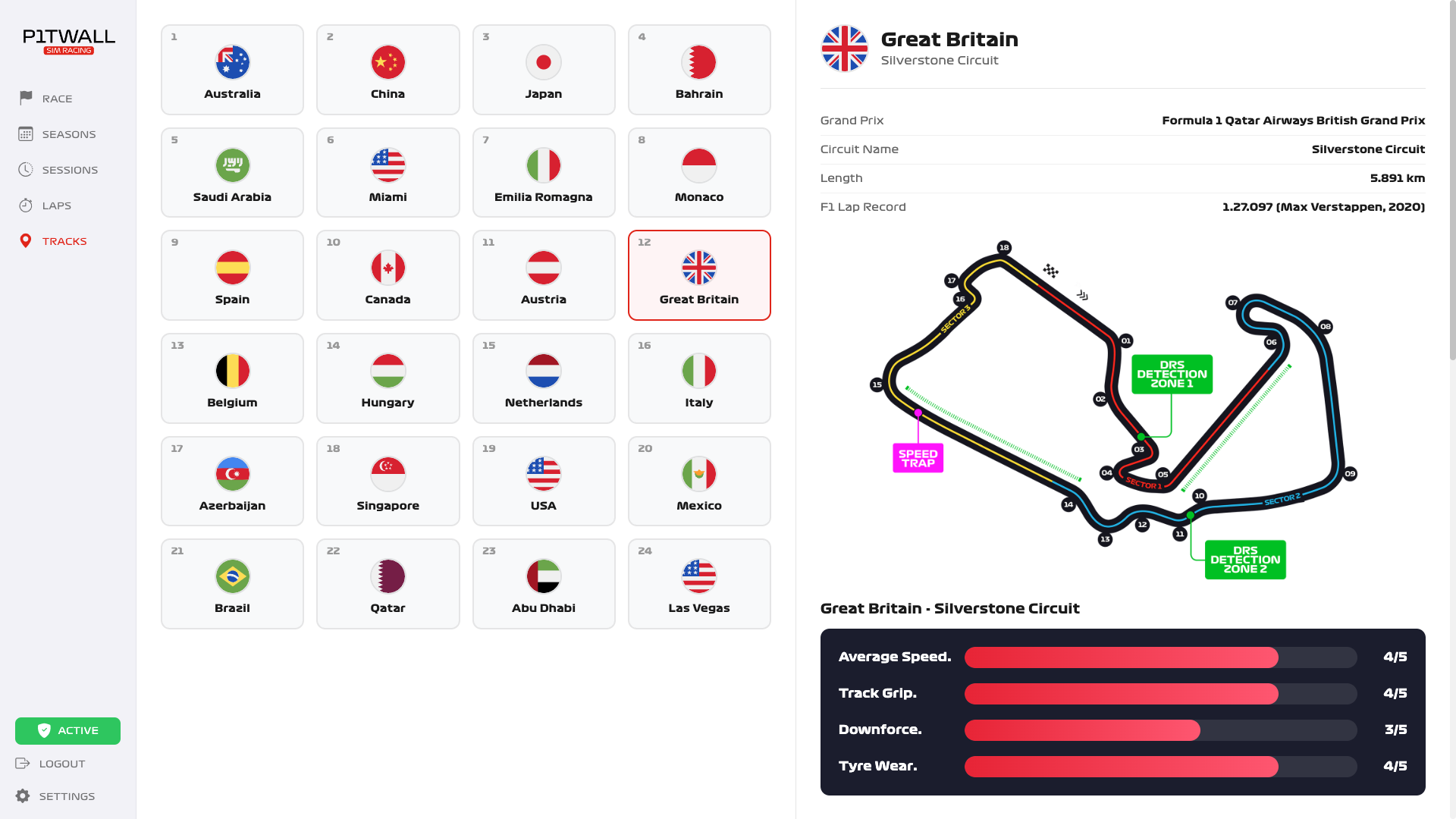
Check our track setup pages for specific tips for each circuit on the calendar.